About CIM

About Us

Cebu Institute of Medicine — Excellence in Medical Education Since 1957

About CIM
About CIM Image
Since 1957
About CIM

Quality of Medical Education

The Cebu Institute of Medicine (CIM) was established in June 1957 as Cebu Institute of Technology College of Medicine. In 1966, CIM became a non-stock, non-profit medical learning institution.

Located at the uptown section of Cebu City, CIM has grown to become a leading medical institution outside Metro Manila. From 33 graduates in 1962, the school has as of August 2013 produced 5,162 physicians, 42 of whom graduated with honors. 129 of its graduates have topped the Physician Licensure Examination. Ranked number one among the Top Performing Schools in the country 2001 – August 2013.

In March 1987, the Board of Medical Education classified CIM as belonging to Level IV category, the highest category. In April 1996, CHED recognized CIM as one of three Centers of Excellence for Medicine. In September 2001, CHED granted the institution an Autonomous status. In 2007, we received accreditation from PAASCU and in December 2011, we achieved PAASCU Level II Accreditation.

Equally impressive is the high reputation the school graduates have made in medical practice both here and abroad. Many leading practitioners and leaders of medical associations are CIM Alumni.

#1 Top Performing School 2001-2013
Level IV Category (Highest)
Center of Excellence for Medicine
PAASCU Level II Accreditation

We Have

  • Established Cebu Institute of Medicine Medio-Social Services which provides exposure and immersion of medical student in the community & provide basic medical training of local health workers.
  • Established the C.I.M. Clinical Epidemiology Unit, an affiliate of the Southeast Asian Clinical Epidemiology Network, which works for the advancement of medical practice through research.
  • Maintained a tie-up with the Philippine Council for Health Research and Development in numerous projects.
  • CVGH (Cebu Velez General Hospital) a training hospital is the first Mother-Baby friendly private Hospital.
  • Committed to work for the betterment of the community and its people, the Cebu Institute of Medicine and the Cebu (Velez) General Hospital are working hand in hand in an effort to do its share in alleviating the community's health related problems.
History Image
Est. 1957
Our Legacy

History of Excellence

In 1956, three practicing physicians felt an urgent need for a strong and progressive school of medicine in the city of Cebu to provide opportunity to deserving students who would not be able to pursue a medical education elsewhere. This feeling was transformed into an idea that was enthusiastically received and sustained by Dr. Jacinto Velez.

With the need for the new school to be affiliated to a college or a university, an affiliation to the Cebu Institute of Technology was made with the approval of its president, Dr. Nicolas Escario, a friend and classmate of Dr. Velez. Hence, an application for the opening of the future Cebu Institute of Technology, College of Medicine was submitted on January 31, 1957 with the Bureau of Private Education.

On June 5, 1957, permit to offer the first year of the medical course was officially granted. On June 10, 1957, the CIT College of Medicine opened its doors to forty-seven first year students and 1962 graduated its pioneer class of thirty-three (33) graduates.

1957 Year Established
5,530 Graduates (2015)
129 Topnotchers
#1 Top Performing School

In 1956, three practicing physicians felt an urgent need for a strong and progressive school of medicine in the city of Cebu to provide opportunity to deserving students who would not be able to pursue a medical education elsewhere. This feeling was transformed into an idea that was enthusiastically received and sustained by Dr. Jacinto Velez. In a series of brainstorming meetings among the core group of physicians and Dr. Velez, an organization plan was established and a corporation was formed with the following incorporators: Dr. and Mrs. Jacinto Velez, Dr. Eugenio Alonso, Dr. Benito Antigua, Dr. Uldarico Bacay, Dr. Nicolas Escario, Dr. Renato Espinosa and Dr. Jose Tolentino.

Founding Incorporators
Dr. Jacinto Velez & Mrs. Velez
Dr. Eugenio Alonso
Dr. Benito Antigua
Dr. Uldarico Bacay
Dr. Nicolas Escario
Dr. Renato Espinosa
Dr. Jose Tolentino

After the application, Dr. and Mrs. Jacinto Velez, Dr. Benito Antigua, Dr. Uldarico Bacay, and Dr. Renato Espinosa made a concerted effort and worked hard to prepare for its inspection and approval of a permit to open by the school year 1957. Construction for classrooms, laboratories and offices was started at the back of the then Velez Clinic, which was within the hospital complex. Laboratory and library facilities were acquired and cadavers were obtained.

Local physicians were recruited for medical faculty and with the help of Dr. Virgilio Ramos, the then dean of UST College of Medicine and former classmate of Dr. Velez; two members of the UST faculty were convinced to migrate to Cebu. Dr. Fernando Santos (Biochemistry) and Dr. Manuel Alvarez (Physiology and Pharmacology) along with their technicians were among the first faculty and staff of the CIT College of Medicine.

On June 5, 1957, permit to offer the first year of the medical course was officially granted. On June 10, 1957, the CIT College of Medicine opened its doors to forty-seven first year students and 1962 graduated its pioneer class of thirty-three (33) graduates in the 5-year curriculum.

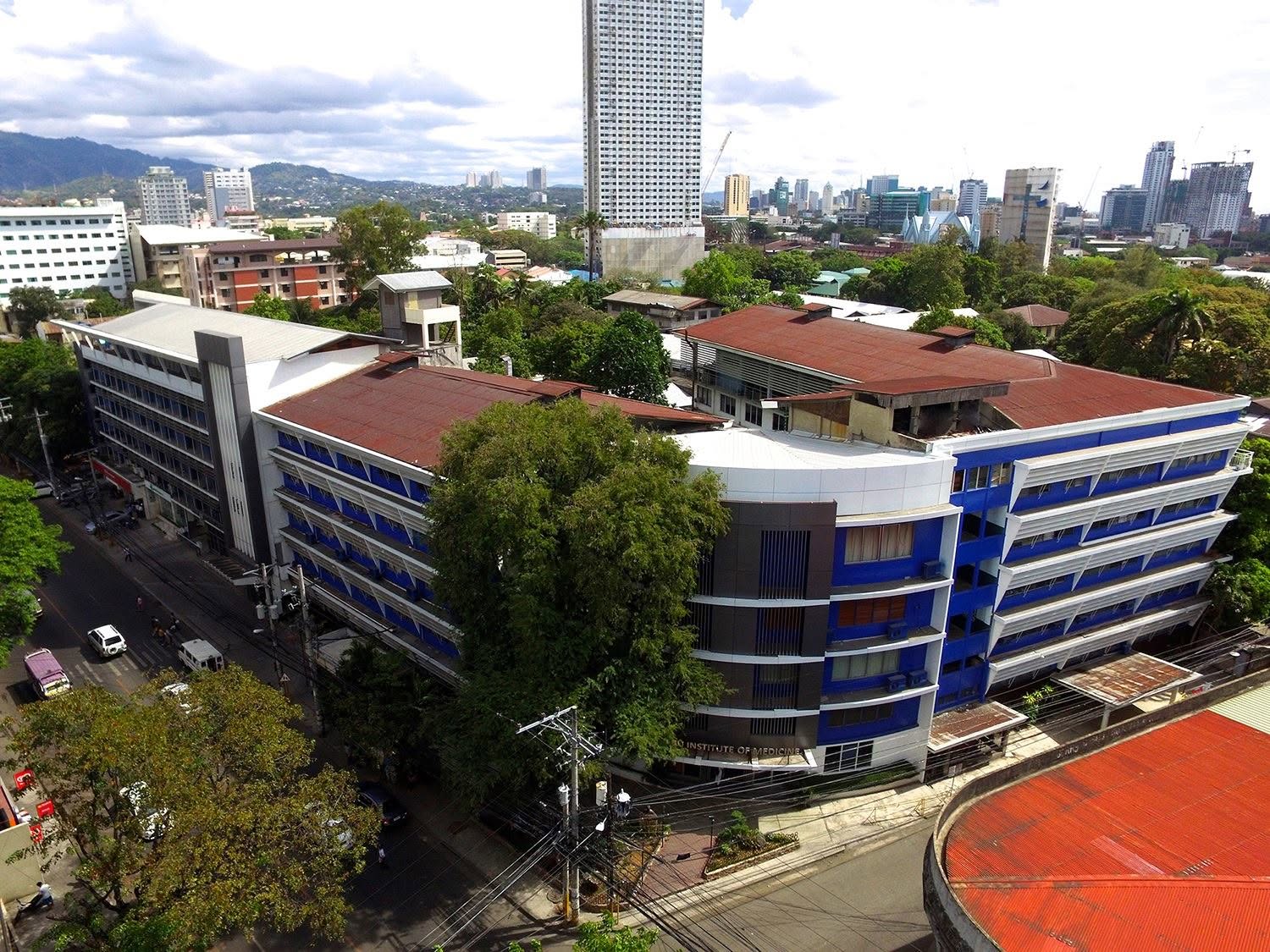
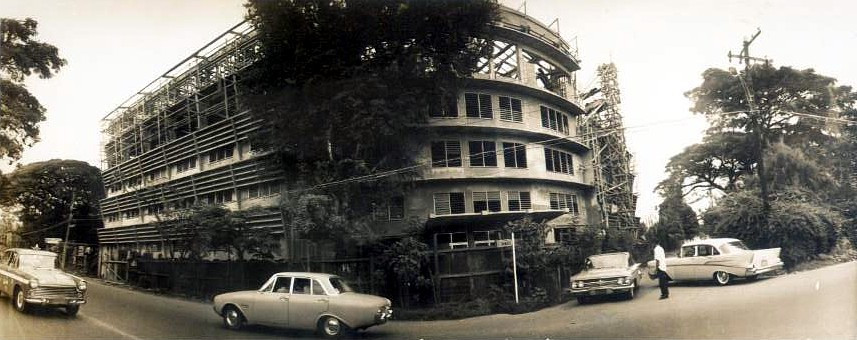
In 1966, Velez College was established and the College of Medicine terminated its affiliation with the Cebu Institute of Technology; it was converted into a non-stock, non-profit corporation and became the Cebu Institute of Medicine (CIM), a sister institution of Velez College. From its original beginnings at the back of the Cebu (Velez) General Hospital, then Velez Clinic, the Cebu Institute of Medicine was transferred to and is now housed in a 5-story edifice at the corner of F. Ramos and V. Ranudo Streets.

In school year 1968-69, the school shifted from the 5-year medical curriculum to a 4-year curriculum. Then in school year 1996-97, CIM began to introduce the Problem Based Learning (PBL) methodology in some of its classes. Finally in school year 2001-02, CIM fully implemented the PBL curriculum starting with its first year class.

The first graduates of the new curriculum (PBL) performed very well in the Physician Licensure Examinations. In the February and August 2007, and February and August 2008 examinations CIM had 100% board passing with topnotchers, the only medical school with >50 examinees with a 100% board pass rating.

From its 33 graduates in 1962, CIM has produced 5,530 graduates as of April 2015, around 42 of whom graduated with honors. Some 129 of its graduates have placed among the top 10 of the Physicians Licensure Examinations. From 2007 to August 2013, its graduates obtained an over-all passing percentage of 99.59% in the Medical Licensure Examinations making CIM as the top medical school in the country.

Awards & Recognition
Level IV Category (Highest) — 1987
Center of Excellence for Medicine — 1996
Autonomous Status — 2001
PAASCU Level I Accreditation — 2008
PAASCU Level II Accreditation — 2011
#1 Top Performing School — 2001-2013
100% Board Passing Rate — 2007-2008
129 Topnotchers in Physician Licensure Exam
Fifty years after its founding in 1957, CIM has maintained its high standards of excellence in medical education as envisioned by its founders.
Our Core

Vision • Mission • Objectives • Core Values

Vision

""Physician with a Heart""

A vision that embodies compassion, excellence, and service in the practice of medicine.

Mission

To produce graduates who are professionally competent, socially concerned and guided by a correct conscience in all their actions.

Objectives

General:

To provide quality medical education relevant to the needs of the country.

Specific:

  • To provide the undergraduates with a firm basic education in medicine and to foster habits of academic excellence.
  • To imbue in the undergraduates the proper moral and social values.
  • To contribute to the development of knowledge through research.
  • To assist in the development of teachers, investigators and practitioners, both urban and rural, through Program of Graduate Education including residency training.
  • To produce graduates who contribute to community growth and development through reflective practice and research .